Custom Motorcycle Crankshafts: From Drawing or Sample to a Production Run That Stays Consistent
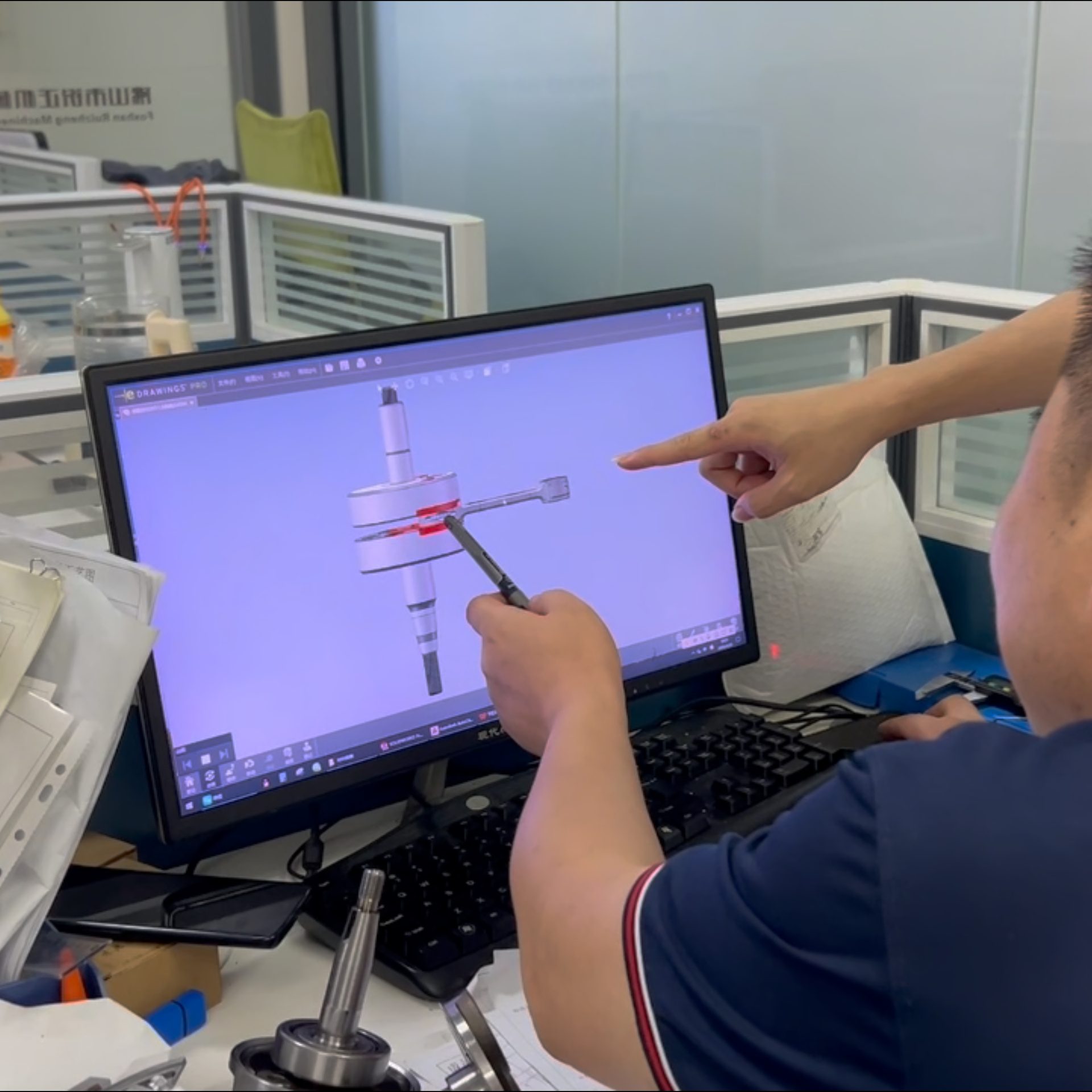
A custom crankshaft inquiry hides two different questions. The workshop asks: can this factory make the part I designed? The purchasing manager asks: can it make the same part, the same way, in every batch? A project only works when both answers are yes. This article covers both — how a drawing or a sample becomes a manufacturable product, and what keeps production consistent after the sample is approved.
What can be customized
- Stroke — raised by an offset crank pin or re-machined crank webs; from +1 mm to +14 mm depending on the model.
- Crank pin — Ø18–35 mm diameter, 39–54 mm length, made to your sample or drawing and produced in our own workshop.
- Connecting rod — centre distance and end sizes to specification.
- Crank webs and assembly width — machined to drawing.
- Balancing — dynamic balancing grade G2.5–G6.3.
- Surface specification — hardness 50–60 HRC, customizable; effective case depth 1.0–2.0 mm; ground surfaces at Ra ≤0.8 μm.
- Brand work — laser logo and marking, branded packaging.
Before any metal is cut: the engineering review
Machining is the last step of a custom project, not the first. Three checks happen before it, and each one removes a specific risk from your project.
1. Manufacturability review of your drawing. Send a drawing and our engineers check it against the process: whether the tolerances can be held, whether the stroke layout works with the pin and webs, where machining will struggle. You receive a written confirmation of what can be built as drawn — and what cannot — before you spend anything on samples.
2. Measurement first when there is only a sample. Send a sample and it is measured before anything else: stroke, pin diameter and length, rod centre distance, assembly width, key dimensions. The measurements become a specification sheet; the sheet becomes a confirmed drawing; only then does machining start. A used sample is one worn example of a part — producing directly from it copies its wear and its errors into every batch. The specification sheet is what turns one sample into a repeatable product.
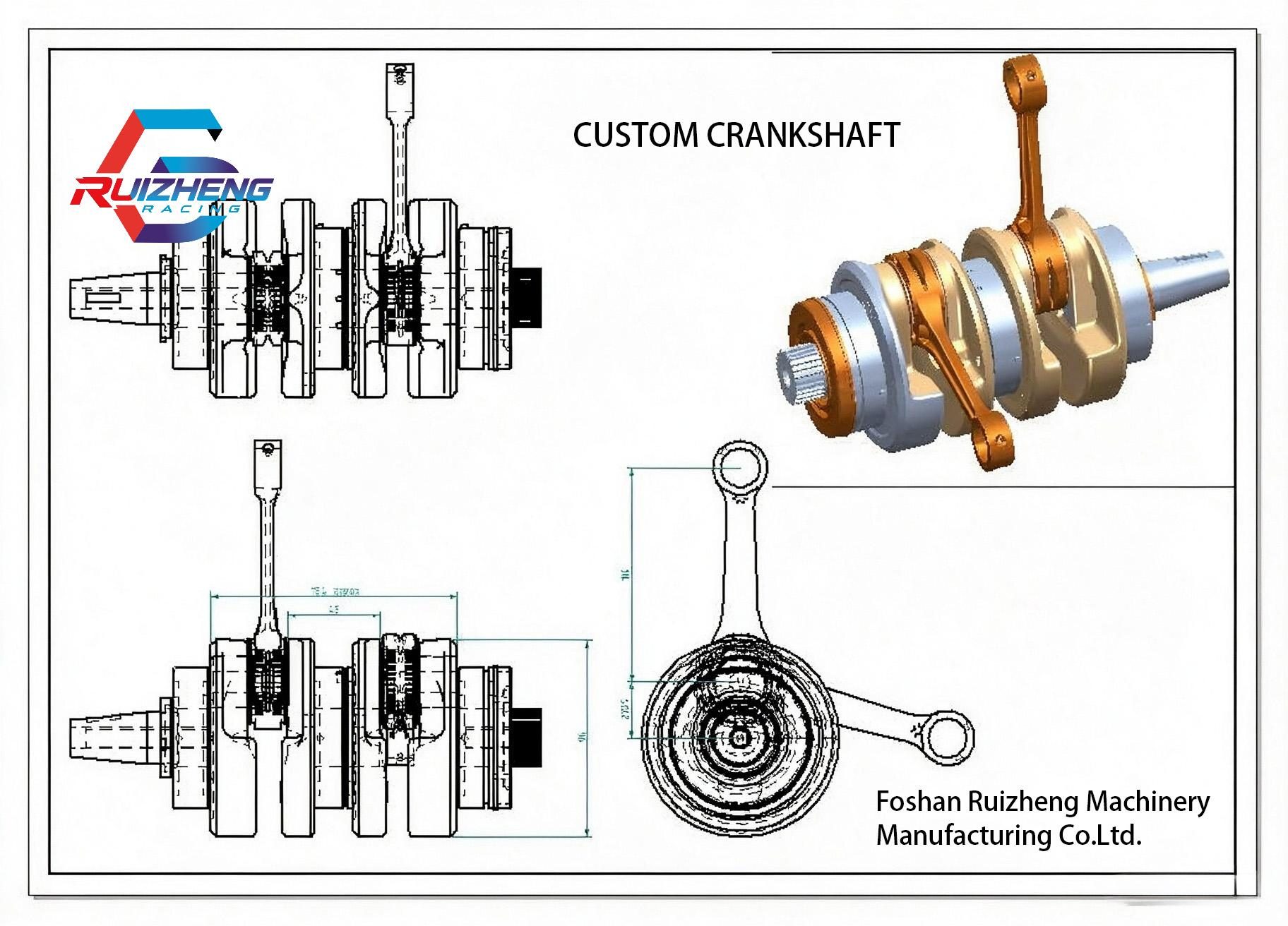
3. Design feedback, with reasons. If the review finds a weak point — a hardness the chosen material cannot reach, a tolerance tighter than the function needs, a detail that will concentrate stress — we say so and propose the change, with the engineering reason behind it. You decide. The version that goes into production is the version both sides have agreed on paper.
This review process is the difference between a machining supplier and an engineering partner: the drawing that reaches the workshop has already survived the questions that otherwise surface as failed samples, delayed batches and parts that almost fit.
Three projects, briefly
A Ukrainian engine-parts brand sent a crankshaft drawing for a model we had not built before. The review changed two things — the material and one processing step — both to improve wear resistance and service life. The brand approved both changes. After delivery, their feedback was one line: "Thank you for the correct and professional experience. I will give you another order soon."
An Indonesian racing workshop took our KR150 stroker crankshaft and tested it themselves: on their dyno, and head-to-head against the best-known local brand in their scene. Their report: 2 HP more, and the win in their comparison. The test was theirs, not ours — the factory has no bikes to test on, so results reported by customers are the evidence we build on.
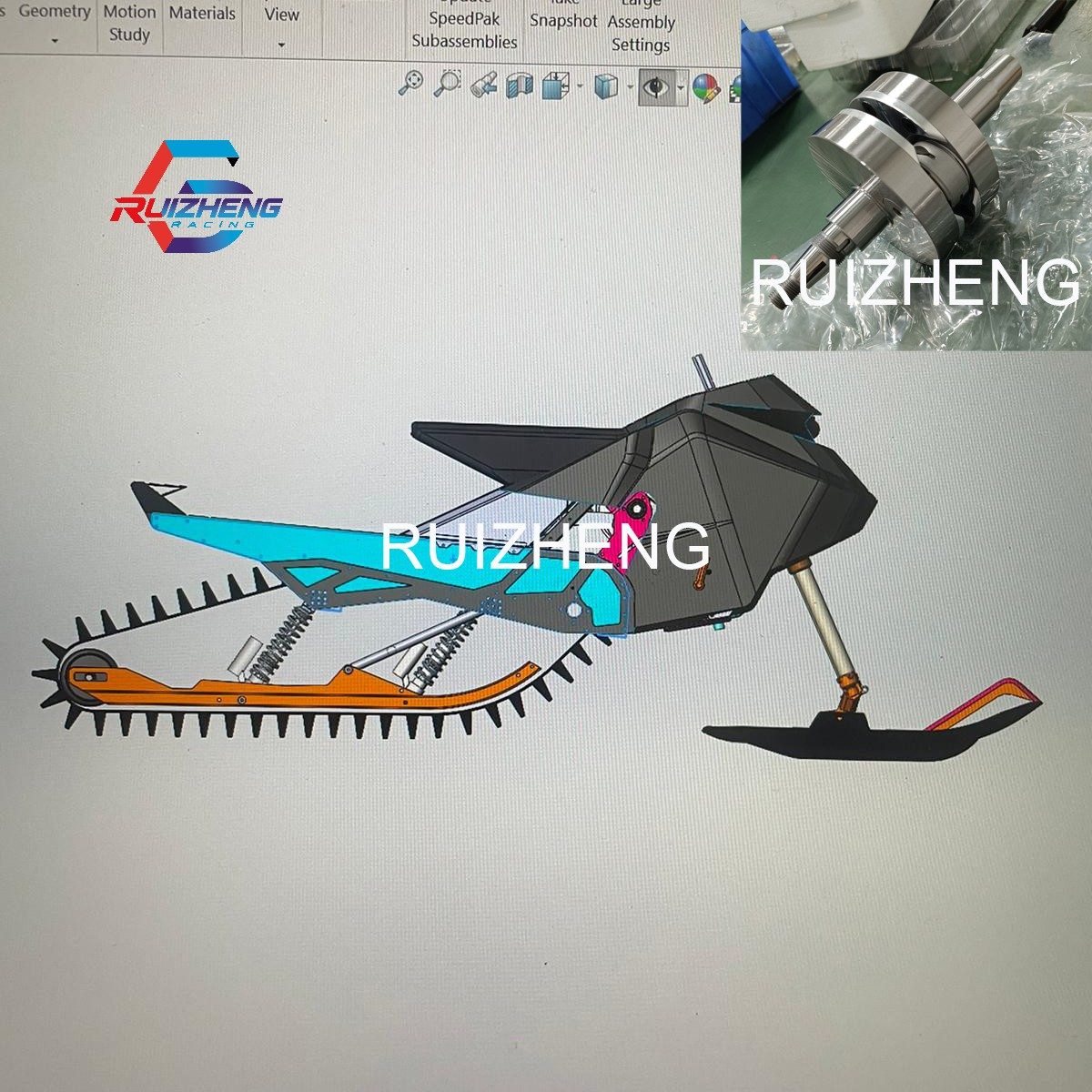
A customer in the United States commissioned a crankshaft for a snow vehicle — a structure outside the motorcycle range entirely. The part was developed from the vehicle's specification, produced, and fitted by the customer. Their test report was three words: "Crank is running well."
More projects are documented on the customer cases page.
After the sample is approved: how batches stay consistent
One gate comes first: no order goes straight into mass production. After an order is placed, samples are produced first and confirmed by the customer; only then does mass production start. A change costs little on a sample and a great deal in a finished batch — the confirmation step exists to protect the customer's order. Producing the part the customer is satisfied with is our mission, not a courtesy.
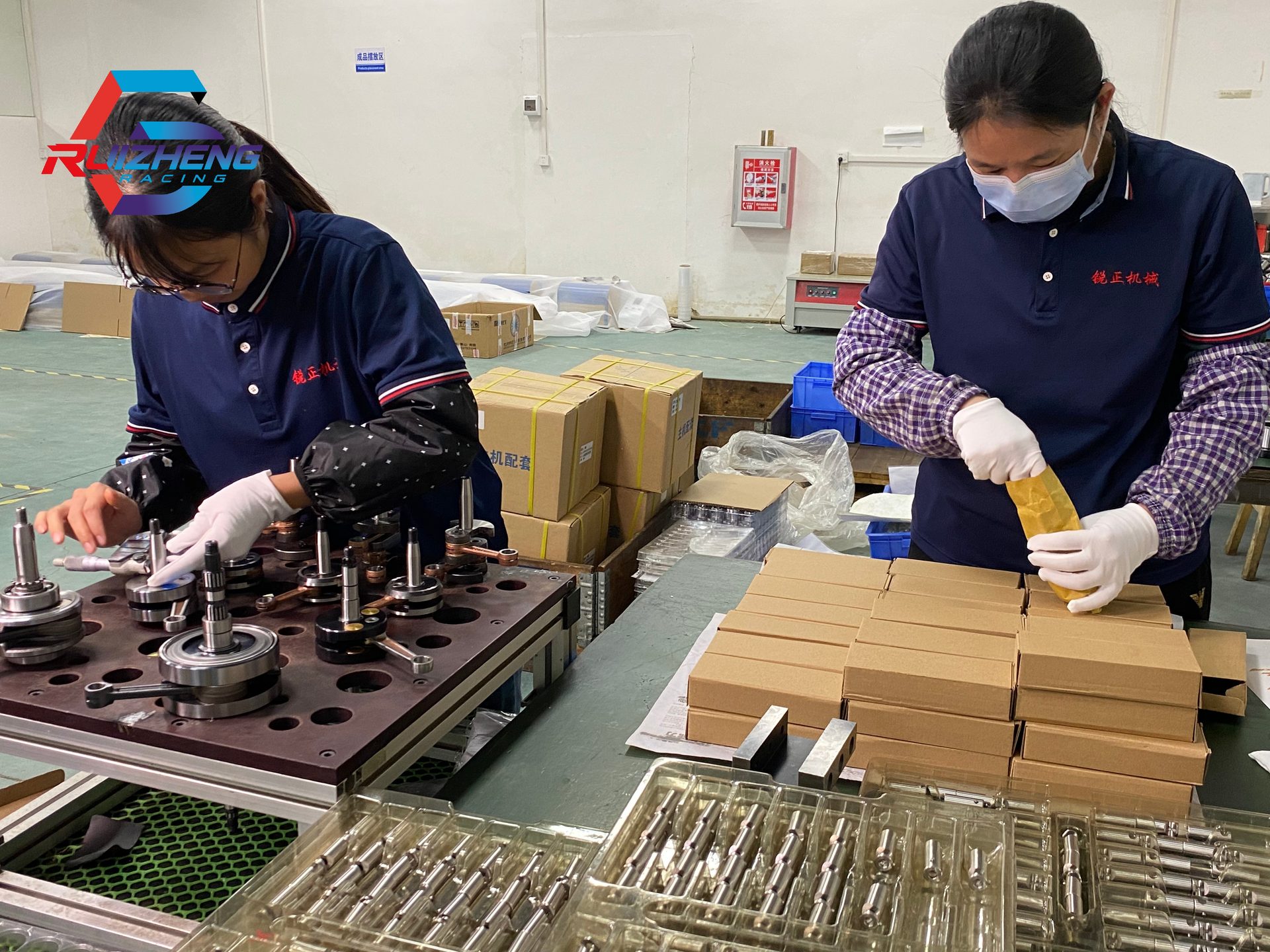
The approved sample is not the production standard. The specification sheet is. Production runs to the frozen sheet through one fixed chain — blank preparation, CNC turning, milling, grinding, assembly, inspection, laser marking and packing — and on crankshafts the core machining, assembly and inspection run in our own workshop, under the same roof as the engineers who signed the sheet.
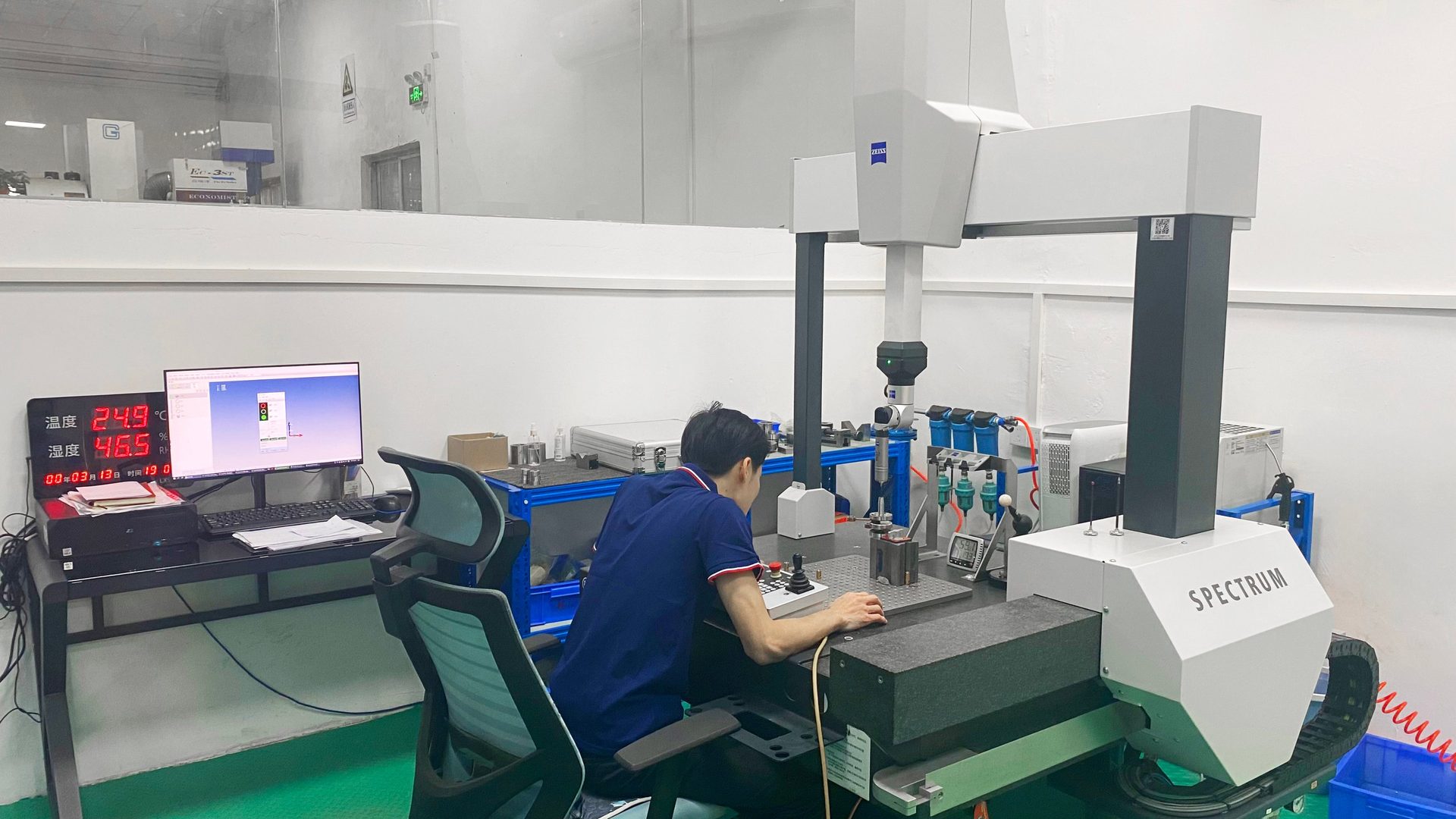
Each batch is checked against the same reference values: crankshaft runout ≤0.02 mm, key dimensions held to ±0.003 mm, surface hardness and case depth recorded per batch. Inspection runs on a Zeiss SPECTRUM CMM, a Shinrein 4030 3D optical measuring machine and Rockwell hardness testing in a dedicated inspection room.
Consistency also needs capacity behind it. The factory runs 70+ production machines in a 2,000 m² workshop, producing around 2,000 crankshafts and 5,000 crank pins per month. That is what stands behind a delivery commitment: mass production in 30–60 days depending on quantity, quoted against real capacity rather than hope.
OEM and ODM: your brand on the part and the box
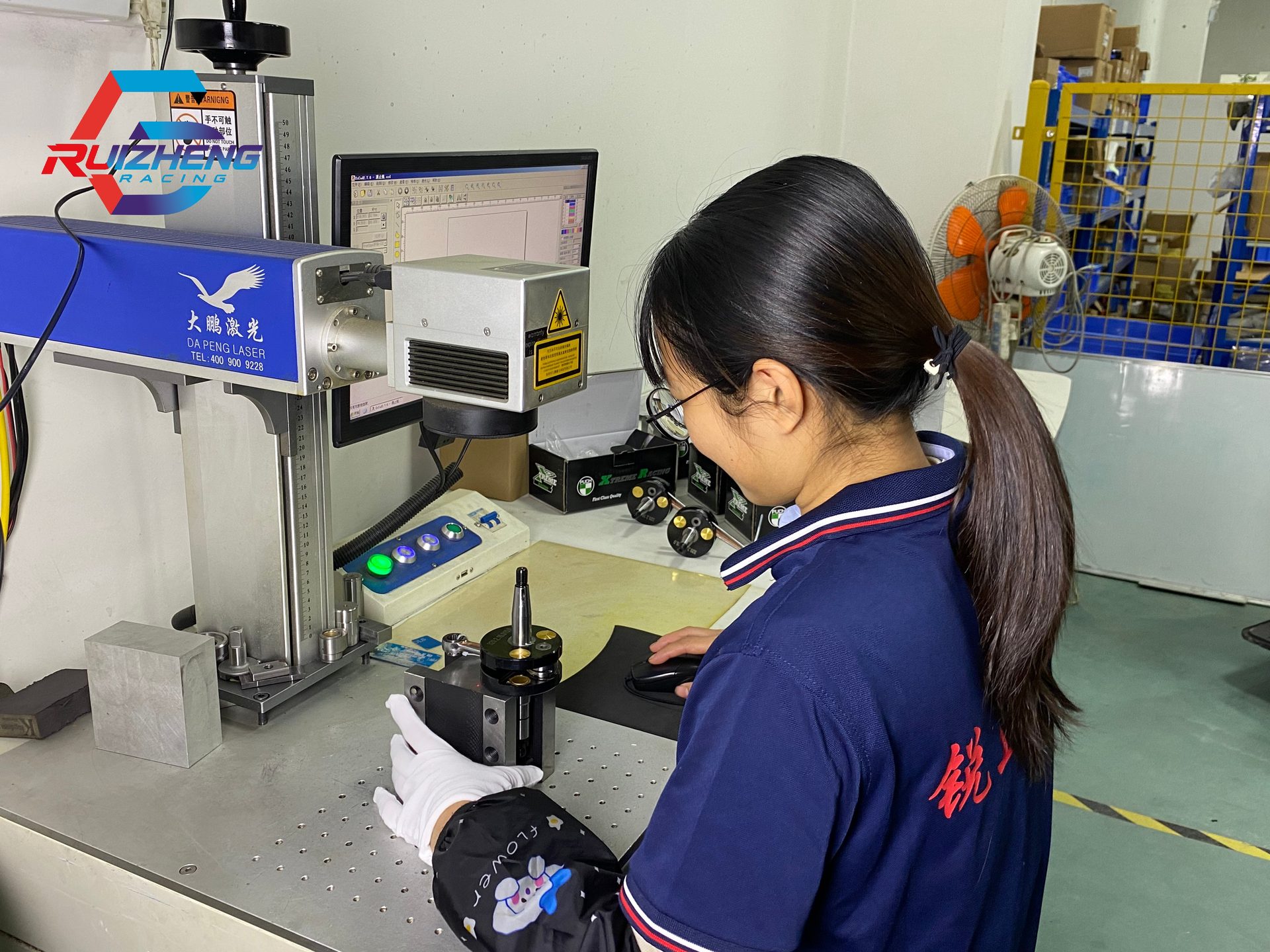
Parts are laser-marked in our own workshop — your logo, your part numbers, your marking layout. Packaging follows your brand specification, from the individual box to the export carton. The engineering file behind the product stays traceable to its batch, so a re-order two years later is built from the same specification sheet as the first run.
MOQ: why the standard is 300, and when it moves
The standard MOQ for a custom crankshaft project is 300 pieces. The reason sits upstream of us: crankshaft raw material is purchased in batches, and the smaller the run cut from that material, the higher the unit cost. Three hundred pieces is where the unit price becomes workable for wholesale.
It is a standard, not a wall. Projects of 100 or 200 pieces are accepted; the unit price reflects the smaller material batch and is negotiated per project. Tell us the quantity you actually need and the price you are quoted will be the price for that quantity.
Unusual engine structures are accepted as development projects on the same route — large twins, ATV/UTV and snowmobile crankshafts such as the Polaris and Can-Am 1000 platforms. Drawing or sample in, engineering review first, then a written answer on feasibility before any commitment.
FAQ
I have a drawing. Can you evaluate whether it can be manufactured? Yes. The manufacturability review checks tolerances, stroke layout and machining feasibility, and you receive a written confirmation of what can be built as drawn before any sample is made.
I only have a sample, no drawing. Can you work from it? Yes. The sample is measured first; the measurements become a specification sheet and a confirmed drawing, which you approve before machining starts.
If my design has a problem, will you propose changes? Yes. We flag the issue, propose the engineering change and give the reason. Nothing is changed without your approval.
Do I confirm the sample before mass production starts? Yes. After an order is placed, samples are produced first; mass production begins only after you confirm the sample.
How is mass production kept consistent with the approved sample? Production runs to the frozen specification sheet, not to the physical sample. Runout, key dimensions, hardness and case depth are inspected per batch against the same reference values.
Can you apply our logo and packaging? Yes. Laser marking is done in-house, and packaging is produced to your brand specification.
Does the MOQ of 300 apply to every custom project? 300 pieces is the standard, set by raw-material batch purchasing. Runs of 100 or 200 pieces are accepted at a negotiated unit price.
What are the lead times? Samples: 15–45 days depending on the product. Mass production: 30–60 days depending on quantity.
Do you accept development for special engine structures? Yes — twin-cylinder, ATV/UTV and snowmobile crankshafts included. The route is the same: drawing or sample, engineering review, written feasibility answer.
Prepare your project
The specification that gets you an accurate quote from any manufacturer — including us — fits on one page: model and engine; target stroke and how it is reached; crank pin diameter and length; rod centre distance; assembly width; key dimensions and tolerance; hardness and case depth; quantity. Complete it before you ask for prices, and the quotes you receive will be for the same part.
From there the route is short: the custom crankshaft page shows what we manufacture, the quality page shows how production is inspected, and when your specification is ready, send it through request a quote.